How is the intent score calculated?
Last updated: October 8, 2026
Every account in an intent report gets an intent score between 0 and 100. This article explains how that score is built, so you can interpret it and explain it to your sales team.
The score at a glance
The intent score ranges from 0 to 100. A higher number means stronger intent.
It combines a first-party score and a third-party score into one composite intent score.
First-party score
The first-party score is based on the quality and length of an account's engagement with your website, campaigns and ads. Longer article reads, longer video views and longer website visits increase the score more than short ones.
Third-party score
The third-party score is based on changes in how much an account researches your intent topics and competitors. If the signal on a topic is stronger this week than last week, the score goes up. If it is weaker, the score goes down.
Composite intent score
The composite intent score combines both scores using the data source weights of the report:
(First-party weight x first-party score) + (third-party weight x third-party score)
In a Custom intent report, you set the weights yourself.
In a Buyer Journey intent report, the weights are predefined.
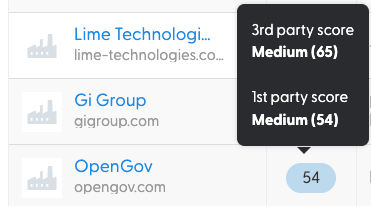
In an intent report, hover over an account's score to see its first-party and third-party scores:
Why the same account can have different scores
Custom intent reports: the first-party score is relative. Each week, an account is scored against the other accounts in the same report. The same account can therefore have different scores in two Custom reports that target different segments, even with the same topics and weights.
Buyer Journey intent reports: the score is absolute, so it does not depend on the other accounts in the report. Each report still only uses the data in its own scope (segments, campaigns, topics), so scores can differ between reports with a different setup.
GTM Leader Dashboard: the GTM Leader Dashboard scores accounts in its own scope: all tracked accounts, all topics across your intent reports and predefined weights. An account's score or stage there can differ from the same account in a specific intent report.
First-party intent trend
The trend compares an account's first-party score this week with last week. Third-party intent does not affect it.
Surging: the score rose by more than 10 points
Steady: the score changed by 10 points or less
Dropping: the score dropped by more than 10 points
What's next
Need help? Reach out to your Solutions Engineer via the chat in the bottom-left corner of the N.Rich platform, by email or Slack.